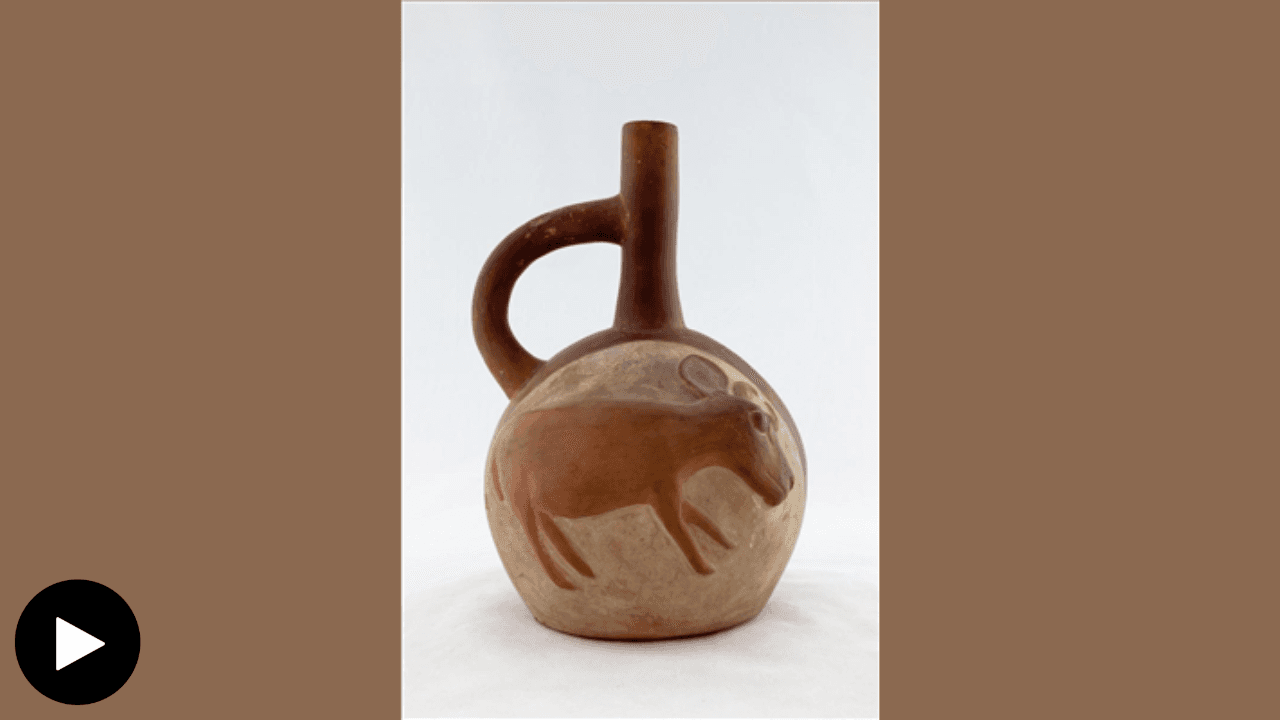
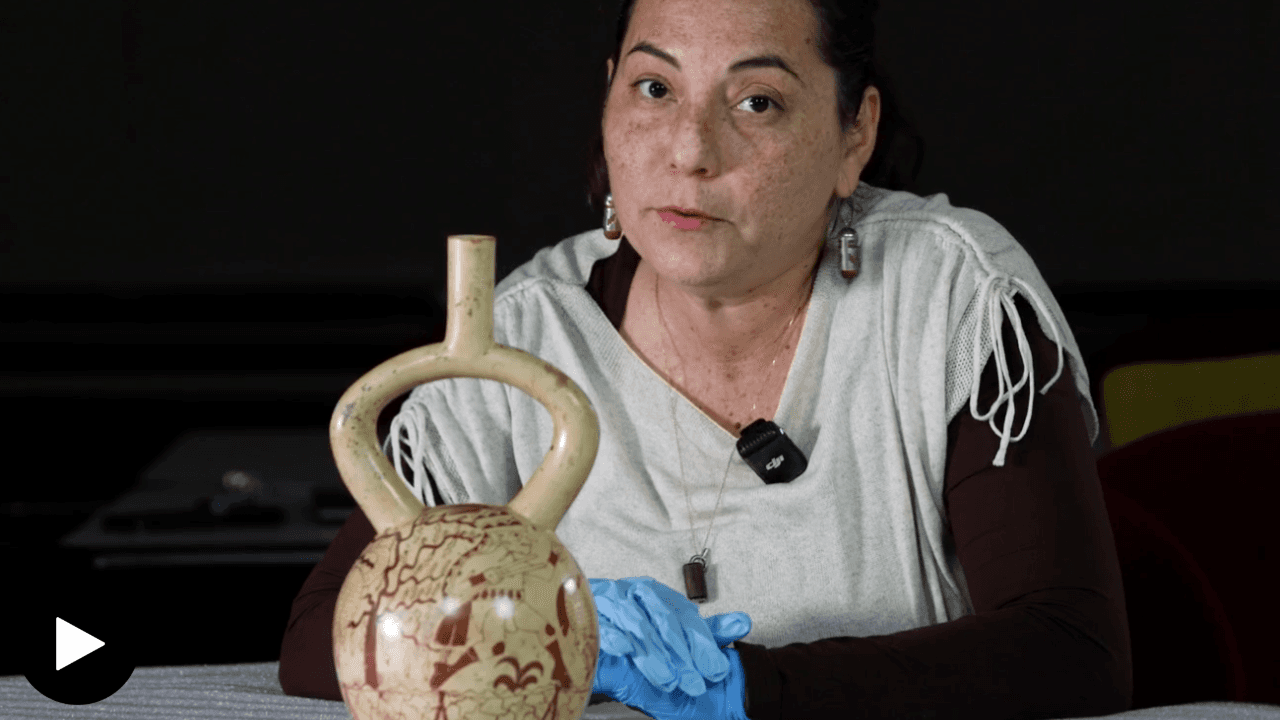
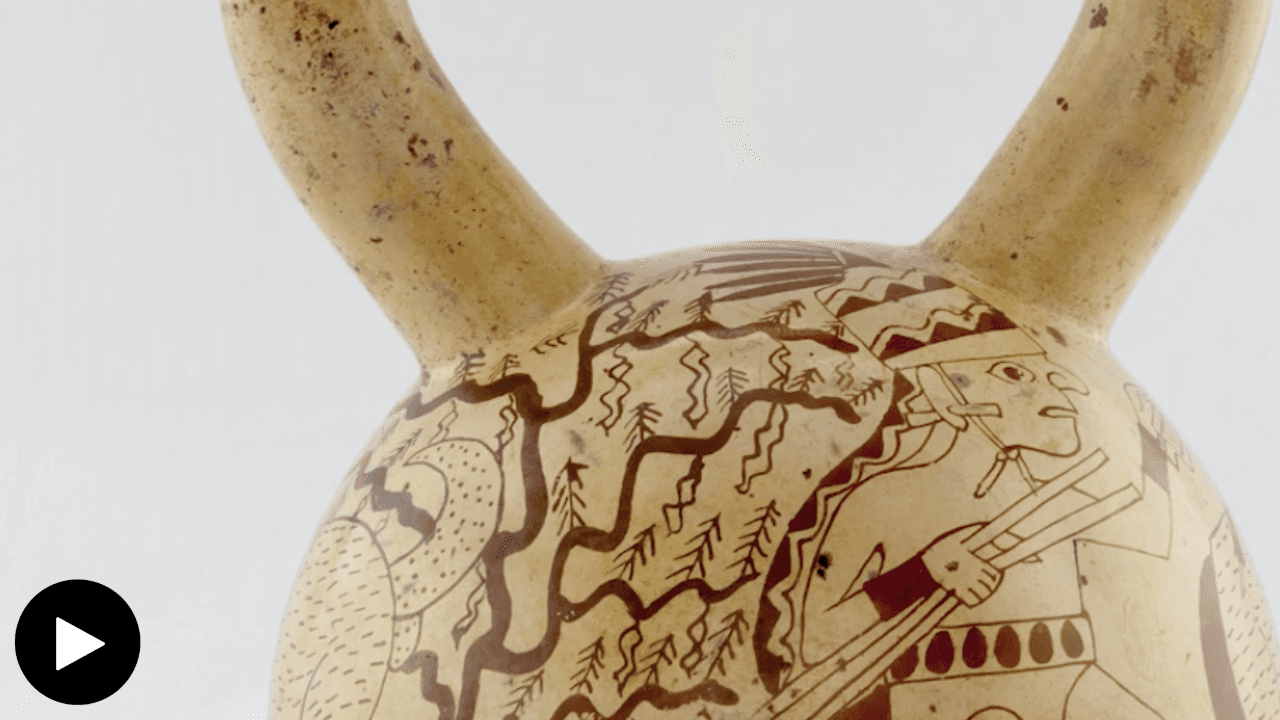
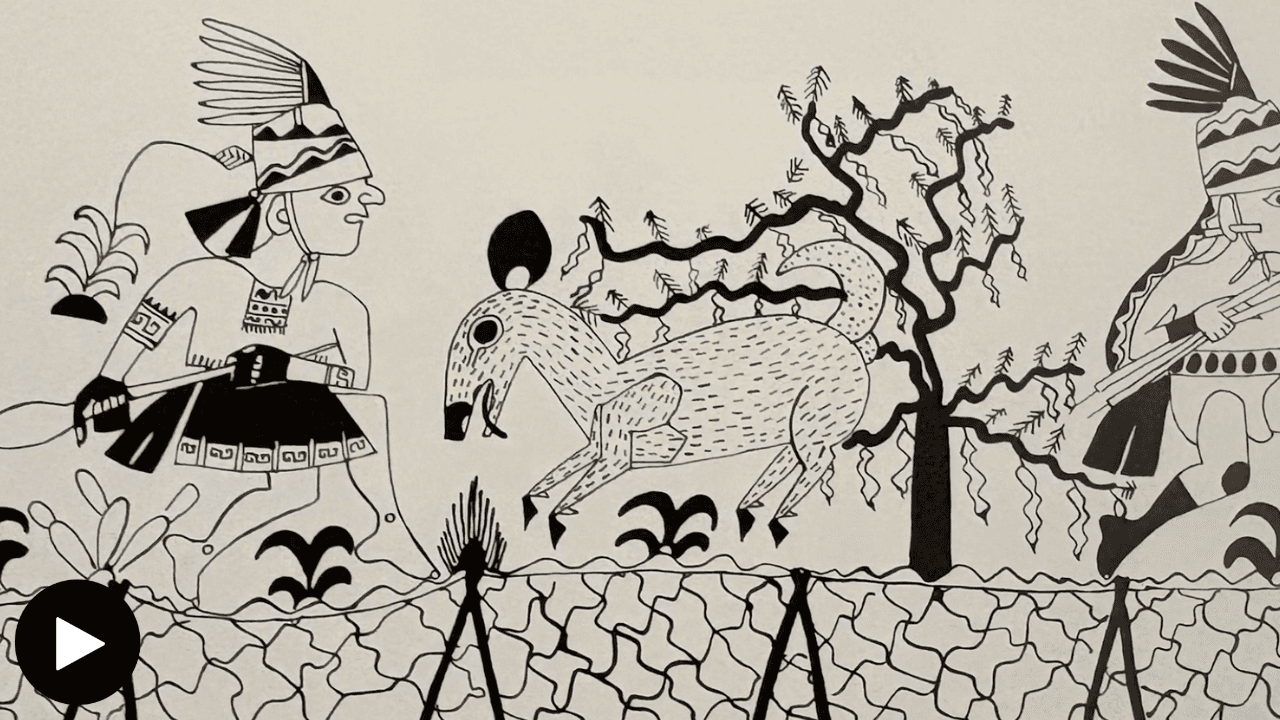
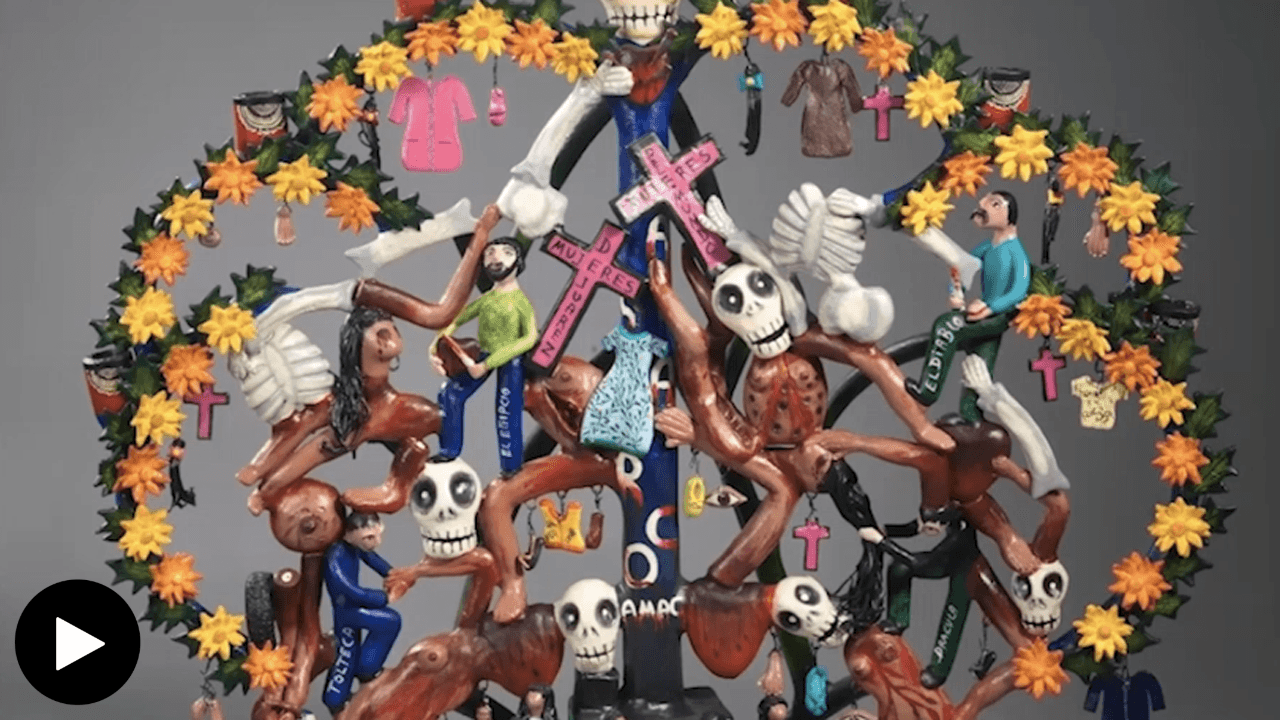
All Videos "Life Story of a Gourd": A Creative Label (by Alana Joy Okonkwo) On Whether or Not to Apply a Coating (by Christian de Brer) ¿Por qué los Moche Construyeron sus Ciudades en el Desierto? (por Solsiré Cusicanqui) A Bridge Between People and Places (by Anuradha Vikram) A Broad Practice: Weaving Together Art and Activism (by Audrey Lopez) A Call for Traditional Ecological Knowledge as a Framework for Climate Resilience (by Patrisse Cullors) A Childhood Memory of Unknowingly Entering a Rice Granary (by Eulalie Dulnuan) A Creative Collaboration: Patrisse Cullors and Kutula by Africana (by Patrisse Cullors) A Deepening Understanding of Color (by Porfirio Gutierrez) A Different View of the Center: Drumming, Ceremony, and Offerings (by Cyndy García-Weyandt) A Gateway to Cultural Knowledge and Discovery (by Youssef Carter) A Gourd and an Artist: Movement, Authorship, and Identity (by Carlee Forbes and Erica Jones) A Historical Moment at the Border, Economies, and Gender (by Matthew H. Robb) A Laboratory for Art and Connection (by Porfirio Gutiérrez) A Moving Return to UCLA (by Patrisse Cullors) A Mystery of Provenance (by Gassia Armenian) A Personal Reflection on Learning about Sheikh Amadou Bamba (by Angelica Lindsey-Ali) A Personal Reflection on Seeing Bulul Figures as a Child (by Armand Camhol) A Portrait of Catastrophe and Care (by Mamyrah Dougé-Prosper) A Reminder of Gendered Violence (by Matthew H. Robb) A Shared Grounding in Ancestral Materials and Techniques (by Andres Estrada) A Universal Gift (by Rudolph T. Ware) A Visionary Craftsman of Grand Scale (by Mario Muñoz Cayetano) Abalone as Taamet (by Lina Tejeda) Abstract Sculpture and Women Artists (by Andres Estrada) Addressing Missing Perspectives through Critical Fabulation (by Alana Joy Okonkwo) Advisor and Artist: The Role of Patrisse Cullors in The House Was Too Small (by Erica Jones) Advocacy and Indigenous Languages (by Tutupika Carrillo de la Cruz) All Connected: Humans, Animals, Landscapes and Spiritual Forces (by Luis Muro Ynoñán) Always Political in Both Form and Process (by Silvia Forni) AMBOS: Artmaking and Mutual Aid (by Natalie Godinez) AMBOS: Work at the Border and in Los Angeles (by Natalie Godinez) An Event That Transcends Any One Religion (by Katherine Smith) An Expansive Understanding of Art and Science (by Porfirio Gutierrez) An Introduction (by Natalie Godinez) An Introduction (by Patrisse Cullors) An Introduction (by Porfirio Gutierrez) An Introduction to Christian de Brer (by Christian de Brer) An Introduction to Daisy Ocampo Diaz (by Daisy Ocampo Diaz) An Introduction to Jahsun Edmonds's Academic and Spiritual Practices (by Jahsun Edmonds) An Introduction to John Connelly and Freddy Janka (by John Connelly and Freddy Janka) An Introduction to Luis Muro Ynoñán (by Luis Muro Ynoñán) An Introduction to the Vessel (by Solsire Cusicanqui) An Invitation to Different Ways of Knowing (by Daisy Ocampo Diaz) An Overview of the Vessel (by Christian de Brer) Ancestors, Deities and Creation Narratives (by Diana Negrín da Silva) Andres Payan Estrada: An Introduction (by Andres Payan Estrada) Archaeology, Discovery, and the Coyolxauhqui at the Temple Mayor (by Matthew H. Robb) Art Markets and Audiences for Yarn Painting (by Íngrid Arriaga) Artist and Community: Storytelling and Ceremony (by Daisy Ocampo Diaz) Artist Residencies as Conversation (by Audrey Lopez) Artist’s Memories of the Making of El Árbol de la Muerte: Maquilando Mujeres (by Verónica Castillo) Artistic and Narrative Complexities (by Gina Athena Ulysse) Artistic Credit, Labor, and Collective Production in South Asian Textile Traditions (by Syona Puliady) Artistic Traditions and Day of the Dead (by Xóchitl M. Flores-Marcial) As if a Million People Were Screaming at Once (by Jean-Daniel Lafontant) Asceticism and Devotion in Jain Pilgrimage Practice (by Steven Vose) Ashe: Life Force and Spiritual Punctuation (by Patrisse Cullors) Ashtāpada: Narrative, Symbolism, and Sacred Place (by Lynna Dhanani) Audu Mai Alijeta's Work in the British Empire Exhibition (by Will Rea) Autumn Breon: From Los Angeles to Planet Esoterica (by Autumn Breon) Bamba in a Political Context (by Angelica Lindsey-Ali) Bawon Samdi, Grann Brijit, and Gede (by Katherine Smith) Becoming an Artist: A Personal Reflection (by Verónica Castillo) Behind the Scenes of Sangre de Nopal (by Silvia Forni) Beyond Logic: Embracing the Seen and Unseen (by Gina Athena Ulysse) Beyond the Studio: Activism, Teaching and other Forms of Collaboration (by Andres Estrada) Blindfolded Skull as a Symbol of Injustice (by Verónica Castillo) Blindfolded Skulls and the Violence of Femicide (by Xóchitl M. Flores-Marcial) Blue Deer as Guide and Trickster (by Cyndy García-Weyandt) Borderless Bodies: The Interconnectedness of Ecology, Geography and Politics (by Andres Estrada) Borders, Beadwork, and Funerary Iconography (by Kyrah Malika Daniels) Bululs as Souvenirs for Visitors (by Eulalie Dulnuan) Butterflies (by Porfirio Gutierrez) Calling on the Orishas Over Time (by Patrisse Cullors) Candles for the Living and the Dead (by Jerry Philogene and Katherine Smith) Canon, Craft, and Recognition: Locating Myrlande Constant (by Gina Athena Ulysse) Celebratory Visual Culture in Senegal (by Youssef Carter) Ceremonial Space and the Function of the Drapo (by Kyrah Malika Daniels) Changing Patterns of Rainfall in Ifugao (by Stephen Acabado) Changing the Paradigm: Reimagining the Tree of Life Genre (by Helen Burgos-Ellis) Children's Changing Perceptions of Bululs: From Fear to Familiarity (by Eulalie Dulnuan) Choḍ Textiles in the Jain Diaspora: Portability, Heritage, and Evolving Practices (by Syona Puliady) Clothes as Memorials to Memories and Machines (by Helen Burgos-Ellis) Co-Founder and Leader of an Artistic Community (by Cyndy García-Weyandt) Cochineal as a Living Technology (by Anuradha Vikram) Cochineal in Animal and Plant-based Fibers (by Porfirio Gutierrez) Cochineal in Contemporary Art (by Porfirio Gutierrez) Cochineal Use as an Example of Indigenous Scientific Knowledge (by John Connelly and Freddy Janka) Collaboration and Expanded Practices (by Audrey Lopez) Collaboration: The Importance of Respect and Personal Connections (by Tanya Aguiñiga) Collaborative Learning and Knowledge Sharing: Tanya Aguiñiga's Journey with Cochinilla (by Natalie Godinez) Color in the Design of The House Was Too Small (by Erica Jones) Colors of Pain, Colors of Hope (by Xóchitl M. Flores-Marcial) Commissioning the Carvings (by Armand Camhol) Communication Between Human and Non-Human Beings (by Diana Negrín da Silva) Community Engagement and Reframing Everyday Objects in Jain Textile Exhibitions (by Syona Puliady) Concepts of Nirvana in Buddhism and Jainism (by Steven Vose) Connecting Fully with Taamet (by Lazaro Arvizu) Connecting with Culture Bearers and Elders (by Lazaro Arvizu) Connections between Life and Death (by Helen Burgos-Ellis) Consecration: From Wood Carving to Bulul (by Marlon Martin) Consequences of Neoliberal Policies in Haiti (by Mamyrah Dougé-Prosper) Conservation Decisions: The Market vs. the Museum (by Christian de Brer) Conservation: Scientific Analysis and Dialogue With Source Communities (by Christian de Brer) Contemporary Art, Cultural Expectations, and Yarn Painting (by Diana Negrín da Silva) Convergence and Divergence in the Practices of Tanya Aguiñiga and Porfirio Gutiérrez (by John Connelly and Freddy Janka) Core Values of Vodou (by Jean-Daniel Lafontant) Corn and Its Primordial Significance (by Minerva Carrillo de la Cruz) Corn in Many Forms: Multiplicity in Representation (by Minerva Carrillo de la Cruz) Cosas que Sangran and Transmigration [Migration]: Collaboration, Materiality and Connection (by Silvia Forni) Cosas que Sangran: Complexly Vaginal (by Natalie Godinez) Courage, Advocacy, and Art (by Judithe Hernández) Coyolxauhqui and the Discovery of the Stone at the Temple Mayor (by Helen Burgos-Ellis) Coyolxauhqui: A Potent Icon of Feminine Power (by Xóchitl M. Flores-Marcial) Craft as Fine Art: A Liberatory Practice (by Jerry Philogene) Craig Torres: Mentor and Inspiration (by Lazaro Arvizu) Creating and Teaching: Conversation and Continuity (by Lazaro Arvizu) Creative and Economic Constraints in Weaving: Porfirio Gutiérrez's Migration from Teotitlan del Valle (by John Connelly and Freddy Janka) Creative Processes of Interpretation (by Alana Joy Okonkwo) Creatively Engaging with the Process of Relearning (by Lazaro Arvizu) Creole Pigs and the Roots of Disaster (by Mamyrah Dougé-Prosper) Critical Fabulation: Theory and Method (by Alana Joy Okonkwo) Crosses Across Traditions (by Helen Burgos-Ellis) Cultural Knowledge: Craft-based Traditions and Indigeneity (by Andres Estrada) Curatorial View of El Árbol de la Muerte: Maquilando Mujeres (by Matthew H. Robb) Curiosity, Close Looking, and Imagination in Museums (by Alana Joy Okonkwo) Cycles, Rituals, and Celebrations of Corn (by Cyndy García-Weyandt) Daily Practices (by noe olivas) Debates Around Iconography in Moche Vessels (by Luis Muro Ynoñán) Deciding Differently: Collaboration and Community (by Daisy Ocampo Diaz) Depicting Gendered Violence (by Helen Burgos-Ellis) Desert Mechanic Shops and the Symbolism of Tires (by Xóchitl M. Flores-Marcial) Diaspora, Migration, and Multi-Generational Indigenous Knowledge (by John Connelly and Freddy Janka) Digambaras and Shvetāmbaras (by Steven Vose) Distinctive Characteristics of Moche Ceramics (by Luis Muro Ynoñán) Distinctive Techniques of Moche Artists (by Solsire Cusicanqui) Distribution of Corn: A Reflection of Wixárika Cosmology (by Cyndy García-Weyandt) Doing not Practicing (by Lazaro Arvizu) Drums and Learning through Spiritual Practice (by Cyndy García-Weyandt) Early Career of José Benítez Sánchez (by Íngrid Arriaga) El secreto de la cerámica Moche: la técnica bicroma (por Solsiré Cusicanqui) Embodying the Orisha (by Patrisse Cullors) Embodying the Orishas in They Are With Us (by Patrisse Cullors) Engaging With Art: Material as a Means of Understanding (by Andres Estrada) Erica Jones and Carlee Forbes Introduce Themselves (by Carlee Forbes and Erica Jones) Escena de caza en la iconografía Moche (por Solsiré Cusicanqui) Eshu the Messenger (by Patrisse Cullors) Ethical Imperative to Disseminate Accounts of Border Violence (by Xóchitl M. Flores-Marcial) Evidence of Use (by Christian de Brer) Evolving Tradition: Economics and the Impact of Collectors (by Carlee Forbes and Erica Jones) Experiencing Empire: Visiting the British Empire Exhibition (by Will Rea) Experiencing the Sun: The Soundscape in Sand Acknowledgement (by Daisy Ocampo Diaz) Experimentation in process, materials and medium (by Porfirio Gutierrez) Experimenting with Cochineal in a Tumultuous Time (by Tanya Aguiñiga) Exploring Non-Traditional Techniques (by Porfirio Gutiérrez) Export Art as Historical Record (by Carlee Forbes and Erica Jones) Expressions of Memory and Displacement (by Andres Estrada) Factories and Cities (by Xóchitl M. Flores-Marcial) Factories, Injustice, and Environmental Harm (by Verónica Castillo) Female and Feminine in Form and Materials (by John Connelly and Freddy Janka) Filming in Zihuatanejo, Guerrero, Mexico (by Patrisse Cullors) From a Restaurant in Dakar to the Fowler Museum (by Allen F. Roberts) From the Beginning: Material and Ancestral Knowledge (by Andres Estrada) From the Market to the Spirit (by Porfirio Gutierrez) From the Wellcome Trust to the Fowler Museum (by Carlee Forbes and Erica Jones) From Transmigration to Migration (by Porfirio Gutierrez) From Transmigration to Migration (by Porfirio Gutierrez) Full Circle: The Return of Alum Patrisse Cullors to UCLA (by Erica Jones) Full Immersion (by Patrisse Cullors) Future Research: What Remains to Be Known (by Christian de Brer) Gautama’s Pilgrimage to Ashtāpada: Symbolic Language and Acts of Commission (by Steven Vose) Gender and Motherhood in the Work of Tanya Aguiniga (by Natalie Godinez) Gender in the Art World: An Artist’s Perspective (by Judithe Hernández) Gender, the Lwa, and the Limits of Academic Frameworks (by Mamyrah Dougé-Prosper) Gendered Division of Labor in Ifugao Agriculture (by Stephen Acabado) Geographies of the Wixárika Community (by Cyndy García-Weyandt) Girls on the Roulette of Death (by Verónica Castillo) Giving Voice to the Women of Juárez (by Verónica Castillo) Gratitude, Responsibility, and Relationality (by Lina Tejeda) Grounded in Family (by Porfirio Gutierrez) Guidance and Devotion: The Legacy of Bamba and Fall (by Youssef Carter) Guided by Her Words: The Artist’s Titles Inscriptions (by Katherine Smith) Haitians Helping Haitians: Stories in the Making (by Jerry Philogene) Histories of the Day of the Day (by Xóchitl M. Flores-Marcial) Human Limits and Trusting What Cannot Be Controlled to the Gods (by Marlon Martin) Icons of Greed: Skulls and Structural Violence (by Verónica Castillo) Ifugao Customary Law and the Role of Amama-a (Wise People) (by Marlon Martin) Ifugao Values, Ancestral Wisdom, and the Impact of Assimilation and Nation Building on Ifugao Identity (by Marlon Martin) Important Jain Pilgrimage Sites (by Steven Vose) In Conversation with Tanya Aguiñiga (by Porfirio Gutiérrez) Inate and Ever Present Divinity and Empowerment (by Jahsun Edmonds) Including the North Star (by Lazaro Arvizu) Indigeneous and Non-Indigeneous Understandings of fire (by Char Miller) Indigenous Knowledge and Linguistic Specificity as a Constraint on Transfer of Knowledge (by John Connelly and Freddy Janka) Influences from Nigeria and the Nigerian Pavilion at the British Empire Exhibition (by Will Rea) Inheritance: A Family’s Artistic Legacy (by Verónica Castillo) Innovation and Tradition in Porfirio Gutiérrez's Transmigration [Migration] (by John Connelly and Freddy Janka) Inscriptions: Naming the Devout (by Lynna Dhanani) Interpreting Color, Composition, and Material (by Kyrah Malika Daniels) Interview with the Benítez Family by Diana Negrín da Silva (by the the Benítez Family members and Diana Negrín da Silva) Introduction by Lazaro Arvizu Jr. (by Lazaro Arvizu) Iwa Pele: Good and Gentle Character (by Jahsun Edmonds) Jain Forms of Devotion (by Lynna Dhanani) Jain Understandings of Time (by Steven Vose) José Benítez Sánchez Explaining his Works through Inscriptions (by Íngrid Arriaga) Judithe Hernández: Bearing Witness to the Women of Juárez (by Judithe Hernández) Kombit Mutual Aid Systems (by Mamyrah Dougé-Prosper) La caza del venado: un ritual en la cultura Moche (por Solsiré Cusicanqui) La cosmovisión Moche: humanos, animales y mundos sobrenaturales (por Solsiré Cusicanqui) Land Acknowledgements Devoid of Action or Accountability (by Lina Tejeda) Layered Understandings: Migration Through Different Contexts (by Andres Estrada) Layers of Meaning in Aguiniga's Early Use of Cochineal (by Andres Estrada) Learning from the Wildfires of January 2025 (by Char Miller) Lighting the Way: Marigolds and Memories (by Xóchitl M. Flores-Marcial) Limited Insights: Artists for the British Empire Exhibition Listening Between the Lines: Conversations with Myrlande Constant (by Gina Athena Ulysse) Literary and Visual Reflections on the 2010 Earthquake (by Myriam J. A. Chancy) Make My Coming and My Going Blessed (by Azizah Ali) Making and Music: Sonic Landscapes for Creation (by Porfirio Gutierrez) Making Language Visible: Bridging Language and Culture (by Tutupika Carrillo de la Cruz) Making Visible: The Use of Cameras to Examine the Interior of Moche Vessels (by Christian de Brer) Male and Female Both: Paired Gendered Bululs to Support Agricultural Prosperity (by Armand Camhol) Mame Diarra Bousso and Gender Relationships (by Angelica Lindsey-Ali) Mame Diarra Bousso, Mother of Sheikh Amadou Bamba (by Youssef Carter) Marigolds and the Eternal Energy of Mothers and Daughters (by Verónica Castillo) Marigolds as the Traditional Flower for the Day of the Dead (by Judithe Hernández) Marigolds in Ritual, Memory, and Medicine (by Matthew H. Robb) Marlon Martin's Early Childhood and Experience with Rice Rituals (by Marlon Martin) Material Innovation and Symbolism in Northwestern Indian Choḍ Textiles (by Syona Puliady) Materials and Themes of Cosas que Sangran (by Audrey Lopez) Meditations on Making: Thought, Process, and Inspiration (by Verónica Castillo) Memorializing the Dead: The Symbolism of the Candle (by Judithe Hernández) Mentorship and Other Non-Transactional Relationships (by Natalie Godinez) Merging and Emerging Worlds: Reading the Inscription (by Cyndy García-Weyandt) Metaphor and Lens: Cochineal and Immigrant Women (by John Connelly and Freddy Janka) Migration, Trauma, and Healing (by Porfirio Gutierrez) Mobile Communities and Representations of Sacred Locations (by Lynna Dhanani) Moche Firing Techniques (by Christian de Brer) Moche Pottery: A Reflection of Worldview (by Solsire Cusicanqui) Modelling Love: Activism in Action (by noe olivas) Models of Ethical Service (by Rudolph T. Ware) Modern, Contemporary and Wixárika Art (by Íngrid Arriaga) Moksha (by Steven Vose) Mountain Tops as Sacred Pilgrimage Sites (by Steven Vose) Moving Beyond the Dichotomy of Craft and Fine Art (by Judithe Hernández) Moving Beyond Western Interpretive Frameworks (by Luis Muro Ynoñán) Moving Objects and Shifting Meanings (by Carlee Forbes and Erica Jones) Museums: Safeguarding More Than Objects (by Anuradha Vikram) Mutual Mentorship and Collaboration (by John Connelly and Freddy Janka) Myrlande Constant and other Internationally Recognized Artists (by Gina Athena Ulysse) Myrlande Constant, Vodou, and Representing Gender (by Jerry Philogene and Katherine Smith) NAFTA and the Neglect of Women’s Rights (by Judithe Hernández) Naming the Butchers of Juárez (by Verónica Castillo) Narrative Structure and Pilgrimage Mapping in a Jain Choḍ Depiction of Ashtāpada (by Syona Puliady) Natural Literacy: Reading and Understanding the Land (by Lazaro Arvizu) Neither Commodified Nor Owned: The Ephemerality of Sand Acknowledgement (by Daisy Ocampo Diaz) New Readings of the Moon Goddess Coyolxauhqui (by Helen Burgos-Ellis) Nierika: Multiple Levels of Meaning and Form (by Diana Negrín da Silva) Not Rice Gods: Exploring Misconceptions of Bulul (by Armand Camhol) Not Separate but Interrelated: Art, Creativity, and Activism Objects from the British Empire Exhibition in the Fowler's Collections (by Carlee Forbes and Erica Jones) Offerings to Ancestors and Sacred Lands (by Diana Negrín da Silva) On Participating in the PST: Art and Science Collide Exhibition (by Porfirio Gutierrez) Oshun: Strength and Femininity (by Jahsun Edmonds) Oya: A Complex Warrior Deity (by Patrisse Cullors) Oya: Powerful Champion for Women's Rights (by Jahsun Edmonds) Painting with Beads and Light (by Jerry Philogene and Katherine Smith) Pausing to Engage with a New Visual Language (by Daisy Ocampo Diaz) Peaceful Resistance in Sheikh Amadou Bamba’s Teachings (by Youssef Carter) Personal Reflections on Immigration and Labor (by Xóchitl M. Flores-Marcial) Pilgrimage Sites and Their Mediated Forms (by Lynna Dhanani) Pilgrimage, Liberation, and the Importance of Place (by Lynna Dhanani) Pink Crosses of Juárez (by Helen Burgos-Ellis) Playing with Writing, Sound, Ritual, and Aesthetics (by Íngrid Arriaga) Popularization of Yarn Painting in Mexico’s History (by Diana Negrín da Silva) Portals of Learning: Visual Pathways in African Islam (by Umar Hakim) Portraits of Ethical Guidance (by Youssef Carter) Portraying Modernity in Africa (by Will Rea) Potent Examples of Seeing God Everywhere (by Logan Siler) Pre-Contact Themes (by Helen Burgos-Ellis) President François Duvalier and Reclaiming Vodou (by Mamyrah Dougé-Prosper) Problematizing the Term Resilience (by Kyrah Malika Daniels) Re-thinking the Benefits of Fire Suppression (by Char Miller) Reading the Arabic Inscriptions (by Youssef Carter) Reading the Title and the Tablets (by Kyrah Malika Daniels) Realities of Reckless Capitalism and Political Apathy (by Helen Burgos-Ellis) Rebuilding without Rethinking (by Char Miller) Reflecting on Spiritual Influences from Multiple Traditions Reflections and Context Behind the Commission (by Verónica Castillo) Reflections on Histories of African Muslim Women (by Mustafa Okon-Briggs) Reflections on the Commission: A Curatorial Perspective (by Katherine Smith) Regional Craft Traditions and Collaborative Production of Northwestern Indian Choḍ Embroideries (by Syona Puliady) Replications and the Diffusion of Pilgrimage Site Imagery (by Lynna Dhanani) Representations of Divine and Historical Figures (by Kyrah Malika Daniels) Respect for Each Other and Indigenous Knowledge (by Audrey Lopez) Restorative, Pedagogical and Political (by Daisy Ocampo Diaz) Reviving What Was Taken: Indigenous Knowledge and Cultural Continuity (by Matthew H. Robb) Ritual Time, Celebration and Jain Pilgrimage (by Lynna Dhanani) Saints in Sight: Interpreting Islamic Values (by Ramy El-Etreby) Saints, Art, and Music: Cultural Echoes and Expressions (by Mustafa Okon-Briggs) Saṃsāra as the Condition of Living in the World (by Steven Vose) Sand Acknowledgement: A Ceremonial Deinstallation (by Lina Tejeda) Sand Paintings: Ancestral Ties and Community Effort (by Lazaro Arvizu) Scenes of Deer Hunting: Scholarly Interpretations (by Luis Muro Ynoñán) Scorpions as Messengers: Signs, Warnings, and Meaning (by Cyndy García-Weyandt) Searching for Ashtāpada (by Steven Vose) Seeing Speech: Visualizing Communication (by Cyndy García-Weyandt) Seeing the More-Than-Human: Through the Eyes of Students (by Cyndy García-Weyandt) Serving the Community: Museum Support Beyond Collecting Objects (by Anuradha Vikram) Shared Experiences of Colonization (by Lazaro Arvizu) Shared Histories: The Women of Juárez and the World (by Xóchitl M. Flores-Marcial) Sheikh Amadou Bamba as an Anticolonial Icon (by Colson Kishimoto) Sheikh Amadou Bamba, a Global Movement (by Youssef Carter) Sheikh Amadou Bamba: Servant of the Prophet (by Mustafa Okon-Briggs) Sheikh Ibrahima Fall: Protégé of Amadou Bamba (by Youssef Carter) Signs of Hope and Innocence (by Xóchitl M. Flores-Marcial) Skulls and Día de los Muertos (by Xóchitl M. Flores-Marcial) Skulls with Butterflies for Eyes: Life, Death, and New Beginnings (by Kyrah Malika Daniels) Skulls, Mesoamerican Iconography, and Capitalism (by Matthew H. Robb) Snakes Meet Water: Interpretation Across Elements (by Cyndy García-Weyandt) Some Questions for Christopher Donnan (by Christian de Brer) Sophistication in Adaptation: The Moche in the Atacama (by Luis Muro Ynoñán) Sound as a Spiritual Tool (by Patrisse Cullors) Spiritual and Practical: Rice Cycle Rituals in Ifugao (by Stephen Acabado) Strategic Placement by the Moche of Ritual and Urban Centers (by Solsire Cusicanqui) Sufi Movements: Organization, Migration, and Meaning (by Youssef Carter) Sufism in Senegalese Visual Culture (by Youssef Carter) Supporting Madres de Juárez (by Verónica Castillo) Taguiling and the "American" Bululs (by Marlon Martin) Tanya Aguiñiga and Porfirio Gutiérrez: Shared Commitments (by Andres Estrada) Tanya Aguiñiga and Porfirio Gutiérrez: The Collaborative Process of Sangre de Nopal (by Silvia Forni) Tanya Aguiñiga: Engagement in Los Angeles and Beyond (by Anuradha Vikram) Tanya Aguiniga's Practice: In the Studio and Beyond (by Natalie Godinez) Techniques and Materials of Yarn Patining (by Diana Negrín da Silva) Textiles and Cultural Networks in South Asia and the Indian Ocean World (by Syona Puliady) Textiles as a Fundamental Technology and the Connection to Women's Labor (by Anuradha Vikram) Textual Inscriptions and Visual Interpretation in Jain Textiles (by Syona Puliady) Textual References to Ashtāpada (by Steven Vose) The 24 Jina and the Importance of Rishabhadeva, Mahāvīra, and Parsvanatha (by Steven Vose) The 25-year-long, Community-Driven Effort of SITMo (Save the Ifugao Terraces Movement) to Conserve and Strengthen Ifugao Heritage (by Marlon Martin) The Abilities and Practices of a Mara’kame (by Cyndy García-Weyandt) The Active Presence of the Saint (by Allen F. Roberts) The All-Seeing Eye (by Helen Burgos-Ellis) The Andean Concept of Tinkuy: A Meeting of Complementary Forces (by Luis Muro Ynoñán) The Art of Critical Fabulation and Colonial History (by Alana Joy Okonkwo) The Ascetic Path to Liberation (by Lynna Dhanani) The Brighter, the Better: Desire for Color (by Diana Negrín da Silva) The Challenge of Authentication: The Impact of Trade on Museum Collections (by Marlon Martin) The Challenge of Creating Sacred Work in the Museum Context (by Lazaro Arvizu) The Color Red: Signaling Urgency, Demanding Attention (by Verónica Castillo) The Colors of the Orisha (by Patrisse Cullors) The Complex Tension Between Cultural Preservation and Commercial Demand (by Eulalie Dulnuan) The Cosmology of Sand Acknowledgement (by Lina Tejeda) The Cultural and Ecological Significance of Cochineal (by Tanya Aguiñiga) The Cultural Meaning of Bululs and the Variation of Forms, Styles, and Uses Across Time and Regions (by Marlon Martin) The Cultural Tradition of Craftsmanship: Woodcarvers of Hungduan (by Eulalie Dulnuan) The Curatorial Pairing of Tanya Aguiñiga and Porfirio Gutiérrez (by Audrey Lopez) The Deer in Moche Cosmology (by Luis Muro Ynoñán) The Disruption of Traditional Ways of Knowing by Formal Education (by Marlon Martin) The Divine Power of Ashe (by Jahsun Edmonds) The Drum as an Embodiment of Blue Deer (by Cyndy García-Weyandt) The Eagle Above and Below: In the Air and on the Earth (by Cyndy García-Weyandt) The Earthquake and Community Response: A Research Perspective (by Gina Athena Ulysse) The Earthquake and Community Response: A Research Perspective (by Mamyrah Dougé-Prosper) The Ephemeral Nature of Sand Paintings (by Daisy Ocampo Diaz) The Ethics of Display (by Will Rea) The Evil Eye in Mesoamerican Belief Systems (by Xóchitl M. Flores-Marcial) The Evocation of Migration through Shifting Patterns in Weaving (by Audrey Lopez) The Evolution of an Artistic Practice (by noe olivas) The Experience of Participating in a Collaborative Performance with Patrisse Cullors The Female Cochineal: A Personal Connection (by Tanya Aguiñiga) The Function of Choḍ Pațas (by Lynna Dhanani) The Function of Choḍ Pațas (by Steven Vose) The God’s Eye and Sacred Geography (by Diana Negrín da Silva) The Guidance of the Ifá Tradition in the Work of Noe Olivas ((by noe olivas) The History and Significance of the British Empire Exhibition (by Will Rea) The History of Fire Suppression (by Char Miller) The Iconic Rice Terraces' Relationship to the Stories, Rituals, and Heritage of the Ifugao People (by Paulette Crespillo-Cuison) The Iconographic Significance of Blue (by Cyndy García-Weyandt) The Ifugao Pantheon (by Marlon Martin) The Image of the Ballerina (by Carlee Forbes and Erica Jones) The Impact of Increased Production on the Supply of Traditional Hardwoods (by Eulalie Dulnuan) The Impact of Migration on Materials Used in Artistic Practice (by Porfirio Gutierrez) The Impact of Shared Knowledge: Porfirio Gutiérrez and Tanya Aguiñiga in Conversation (by Silvia Forni) The Impact of the Pandemic on Travelling During the Fowler Residency (by Tanya Aguiñiga) The Importance of Context and the Benefits of Multidisciplinary Collaboration (by Luis Muro Ynoñán) The Importance of Deer: Symbolic and Practical (by Luis Muro Ynoñán) The Integration of Spirituality and Art Practice in the Work of Patrisse Cullors (by Patrisse Cullors) The Juárez Murders: Bearing Witness to the Unimaginable (by Judithe Hernández) The Liberated Soul (by Lynna Dhanani) The Lighter Sides of Bulul Figures and the Need for Cross-Cultural Studies (by Armand Camhol) The Loss of Surface Evidence (by Christian de Brer) The Lwa: Forces of This World and the Beyond (by Jean-Daniel Lafontant) The Making of a Stirrup-Spout Vessel (by Christian de Brer) The Materials of Sand Acknowledgement (by Lazaro Arvizu) The Mathematical Structure of the Ifa Divination System (by Patrisse Cullors) The Obatala Sequence of They Are With Us (by Patrisse Cullors) The Ongoing Relevance of Studying the Moche (by Luis Muro Ynoñán) The Origins of the Ifugao Rice Terraces: Challenging the 2,000-Year-Old Narrative (by Stephen Acabado) The Painted Stone of the Moon Goddess Coyolxauhqui (by Helen Burgos-Ellis) The Pairing of Masculine and Feminine in Bulul (by Marlon Martin) The Perfect Metaphor: Coyolxauhqui (by Judithe Hernández) The Persistence of Shamanic Traditions in Ifugao (by Armand Camhol) The Placement of Sand Acknowledgement in the Fire Kinship Exhibition (by Lina Tejeda) The Process and the Team of They Are With Us (by Patrisse Cullors) The Provenance of Wellcome Objects from the British Empire Exhibition (by Will Rea) The Relationship between Natural Dye Colors and the Environment (by Porfirio Gutierrez) The Relationship Between Tanya Aguiñiga's Cosas que Sangran and Porfirio Gutiérrez's Transmigration Piece (by Silvia Forni) The Revolutionary Act of the Artist (by Judithe Hernández) The Ritual Significance of Deer (by Solsire Cusicanqui) The Role of Education in Understanding Identify and Heritage (by Eulalie Dulnuan) The Role of Museums (by Luis Muro Ynoñán) The Role of Rice Deities in Ifugao (by Marlon Martin) The Role of Sand Acknowledgement in the Beginning of the Fire Exhibition (by Daisy Ocampo Diaz) The Role of SITMo in Preserving Community and Cultural Heritage (by Pauline Crespillo-Cuison) The Role of the Ifugao Indigenous People's Education Center (by Eulalie Dulnuan) The Significance of 1938 and The Year José Benítez Sánchez Was Born (by Íngrid Arriaga) The Sound of the Sun (by Daisy Ocampo Diaz) The Story of Oshun and Affirmation of the Essential Role of Women in Ifá (by Patrisse Cullors) The Survival of Ancestral Histories Despite Trauma and Erasure (by Erica Jones) The Symbolism of Sand Acknowledgement (by Lazaro Arvizu) The Tradition of Trees of Life (by Matthew H. Robb) The Use of Framing to Reframe Craft as Art (by Porfirio Gutierrez) The Use of Residue Analysis (by Christian de Brer) The Use of Traditional Rituals by the American Colonial Government (by Marlon Martin) The Use of UV Light to Reveal Hidden Damage and Restoration (by Christian de Brer) The Visible and Invisible Impacts of Tourism-Driven Commercialization (by Eulalie Dulnuan) Themes in Devotional Textiles: Galvanizing the Jain Community (by Steven Vose) Themes of Violence of El Árbol de la Muerte: Maquilando Mujeres (by Xóchitl M. Flores-Marcial) Three Blades, One Heart (by Verónica Castillo) Time to Craft, Freedom to Create (by Gina Athena Ulysse) Time to Create: The Role of the Curator (by Daisy Ocampo Diaz) Tinawon: The Benefits of a Traditional, Single-Harvest Rice Crop (by Stephen Acabado) Tīrthankara as Ford-maker (by Steven Vose) Tongva Kinship with Taamet (by Lina Tejeda) Tongva Relationships Extending to the Galaxy (by Lina Tejeda) Tourism and the Transformation of Traditional Craftsmanship into Commercial Industry (by Eulalie Dulnuan) Training, Techniques, and the Market for Yarn Painting (by Cyndy García-Weyandt) Trees of Life and Death in the Fowler Collection (by Matthew H. Robb) Trees of Life in Context (by Matthew H. Robb) Understanding Past Conservation to Determine Current Strategies (by Christian de Brer) Understandings of the Interconnectedness of Beings (by Cyndy García-Weyandt) Unlearning and Relearning through Engagement with Ancestral Fiber Practices (by Tanya Aguiñiga) Uses and Meanings of Bulul (by Armand Camhol) Using Knowledge Respectfully and Avoiding Compounding Historical Harm (by Tanya Aguiñiga) Using StoryMaps to Highlight the Transmigration of Cochineal (by Tanya Aguiñiga) Variations in Practice Among Carvers Producing for Cultural Purposes and Tourism (by Eulalie Dulnuan) Vehicles for Spiritual Learning (by Anjum Mir) Veronica Castillo in Art Historical Context (by Matthew H. Robb) Violence Along the Border (by Xóchitl M. Flores-Marcial) Violence and Misogyny (by Xóchitl M. Flores-Marcial) Visual And Spiritual Symbolism in They Are With Us (by Erica Jones) Visual Density and the Recovery of Memory (by Kyrah Malika Daniels) Visualizing the Sacred and the Potency of Place (by Lynna Dhanani) Visualizing the Saint: Iconography of Sheikh Amadou Bamba (by Youssef Carter) Vodou: an Essential Guiding Force (by Jean-Daniel Lafontant) Western Perceptions of Haitian Independence (by Kyrah Malika Daniels) What is Known and Questions that Remain (by Carlee Forbes and Erica Jones) Where Community, Politics, and Spiritual Life Meet (by Íngrid Arriaga) Where the Sacred Dwells: In the Land (by Mario Muñoz Cayetano) Why Coyolxauhqui? The Significance of the Moon Goddess (by Verónica Castillo) Will Rea: An Introduction (by Will Rea) Wixárika Culinary Traditions: Food, Memory, and Culture (by Minerva Carrillo de la Cruz) Wixárika Iconography through the Lens of Language (by Tutupika Carrillo de la Cruz) Wixárika Language Instruction: Methods and Approaches (by Tutupika Carrillo de la Cruz) Wixárika Language, Worldview, and Spiritual Practice (by Tutupika Carrillo de la Cruz) Wixárika Sacred Geography (by Cyndy García-Weyandt) Wixáritari: People of Place, Mobility and Ancestral Belonging (by Diana Negrín da Silva) Women in Islamic Teaching, Scholarship, and Spiritual Leadership (by Rudolph T. Ware) Working with Cochineal During the Pandemic and Since (by Tanya Aguiñga) Working with Natural Materials (by Porfirio Gutierrez) Yarn Paintings as Windows onto Ancestral Worlds (by Diana Negrín da Silva) Yemonja in the Diaspora (by Jahsun Edmonds)