Ashtāpada: Narrative, Symbolism, and Sacred Place
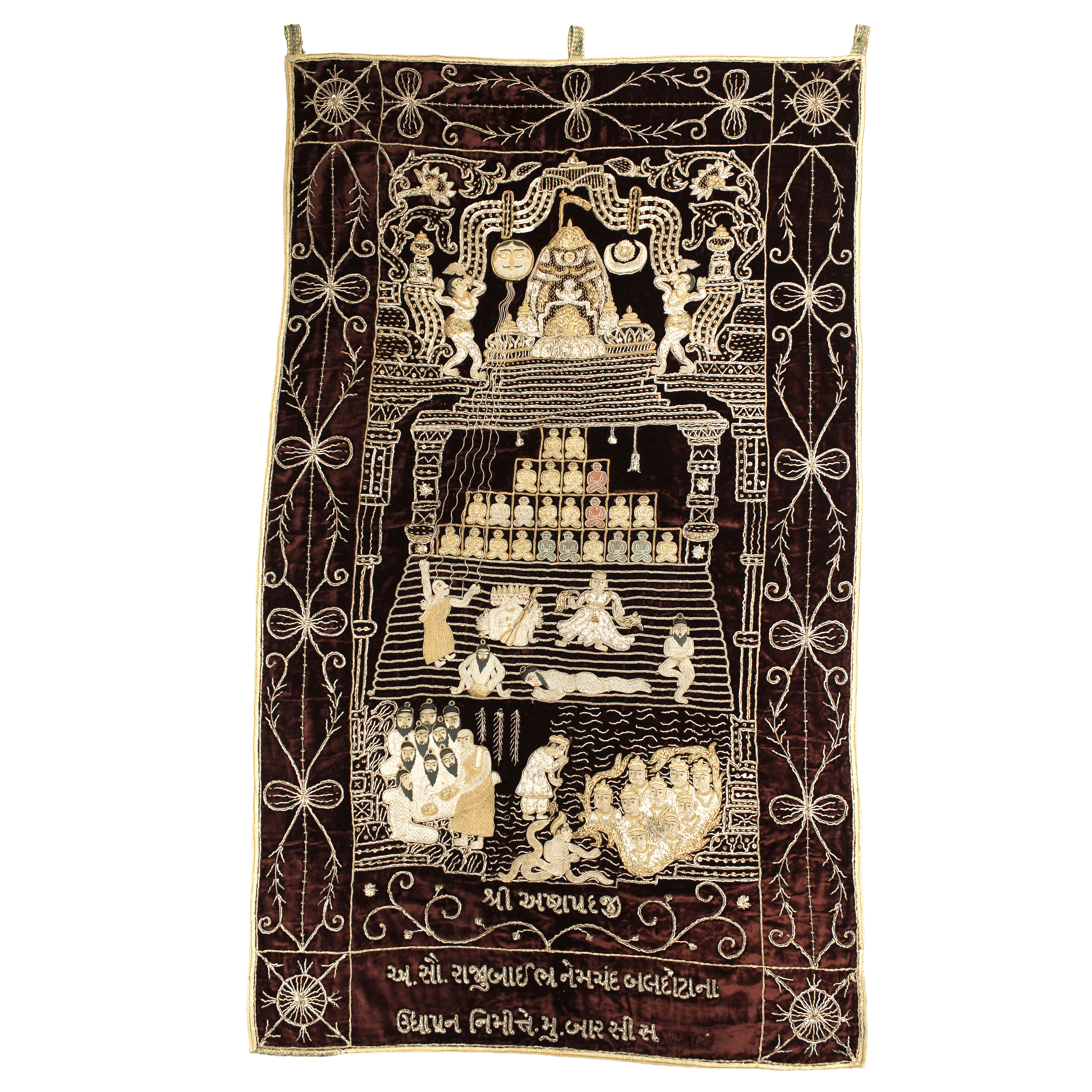
Lynna R. Dhanani discusses a choḍ (painted cloth) depicting the sacred Jain mountain Ashtāpada, the mythological site of Rishabhanātha’s liberation. Though often conflated with Mount Kailāsa, Ashtāpada's true location remains uncertain. According to tradition, Rishabhanātha’s son Bharata built a shrine atop the mountain with gem-encrusted statues of the 24 Jinas, visually echoed in the choḍ. The artwork also illustrates Gautama, Mahāvīra’s chief disciple, successfully making a spiritual pilgrimage to Ashtāpada, where he initiates fellow ascetics by miraculously sharing a bowl of rice pudding. Other scenes reframe Hindu stories—like the descent of the Ganga, the moat of the Sāgara sons, and Rāvaṇa’s failed attempt to disturb the mountain—through a Jain lens. Altogether, the choḍ visually affirms Ashtāpada’s importance as a spiritual and symbolic place of liberation.
View Transcript
1
1
PERSON

2
THEMES