Sufi Movements: Organization, Migration, and Meaning
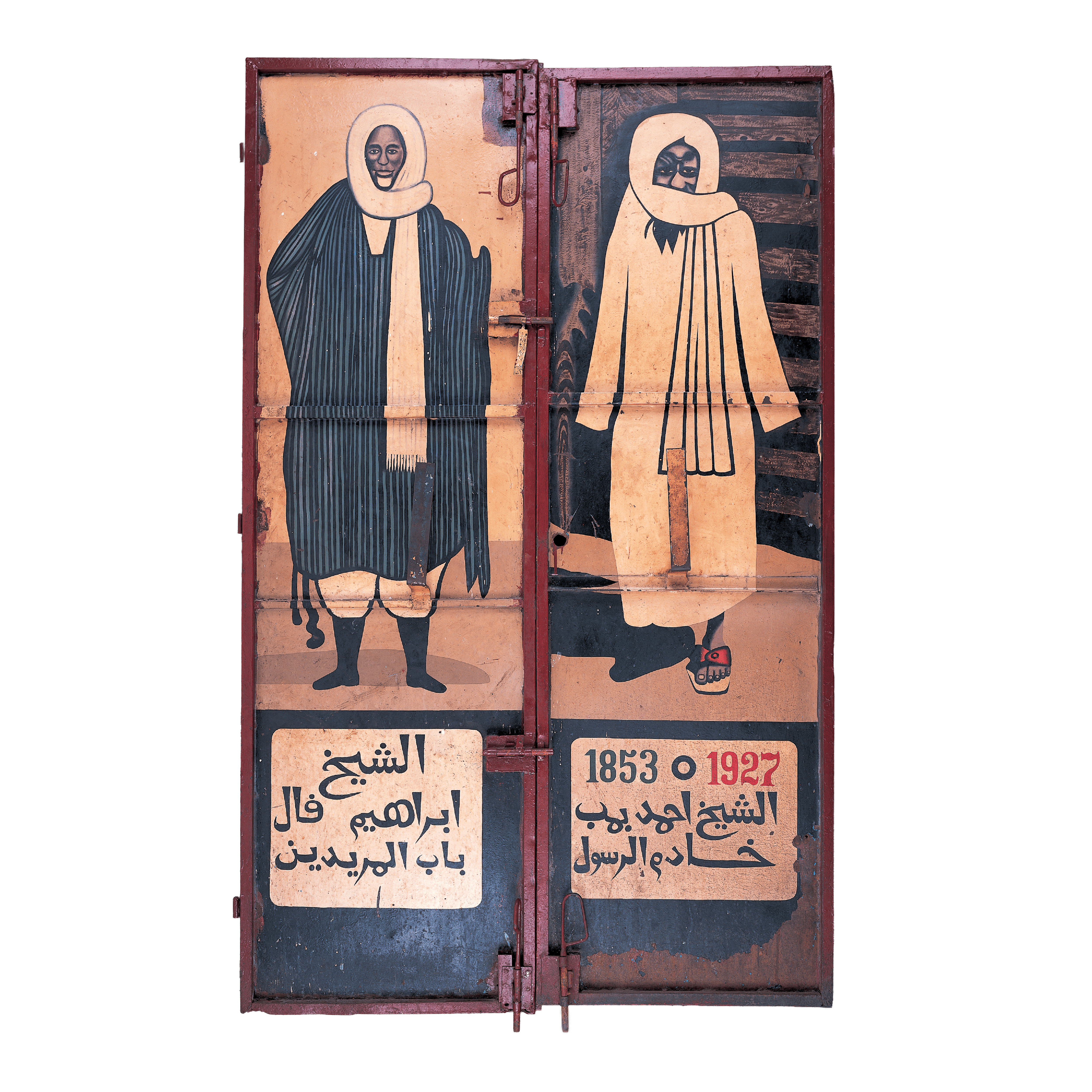
Youssef Carter reflects on Sufi movements in West Africa as vehicles for spiritual, organizational, and migrational movement. Using images like the restaurant doors depicting Sheikh Amadou Bamba and Sheikh Ibra Fall, he highlights how Sufism fosters collective identity, service-based spirituality, and resistance to colonial narratives. These depictions serve as reminders of righteous living and Black identity. The inscriptions emphasize service as a path to spiritual elevation, reframing labor as self-uplift rather than exploitation. Sufi movements offer ongoing, communal, and personal transformation across generations.
View Transcript
1
Restaurant doors depicting Sheikh Amadou Bamba and Ibra Fall
Unidentified artist(s)
1
PERSON

Youssef
Carter
Assistant Professor and Kenan Rifai Fellow in Islamic Studies
Department of Religious Studies, University of North Carolina at Chapel Hill
4
THEMES