Audu Mai Alijeta's Work in the British Empire Exhibition
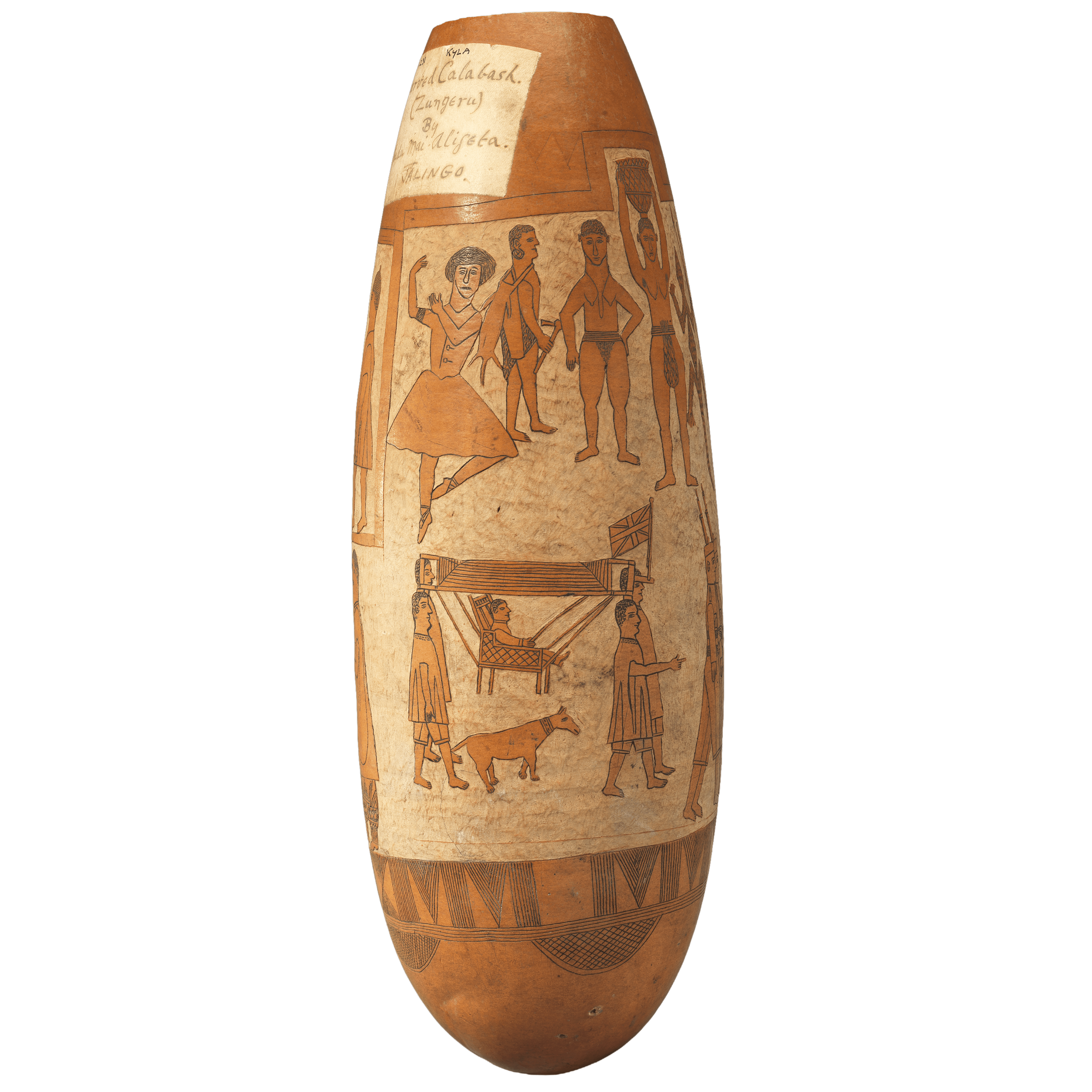
Will Rea analyzes a Nigerian calabash artwork by Audu Mai Alijeta, emphasizing the significance of having a named African artist rather than an anonymous maker. He interprets the carved scenes as a visual record of everyday Nigerian life under British colonial rule, contrasting village activities with representations of colonial authority, including police forces and a British colonial officer. Rea also discusses the work's use of stacked registers, compares it to Yoruba carving traditions, and argues that the artwork presents a human-centered view in which ordinary people remain the focus despite the presence of colonial power.
1
1
PERSON

3
THEMES