“Zungeru” Gourd Container
MUSEUM LABEL
DESCRIPTION
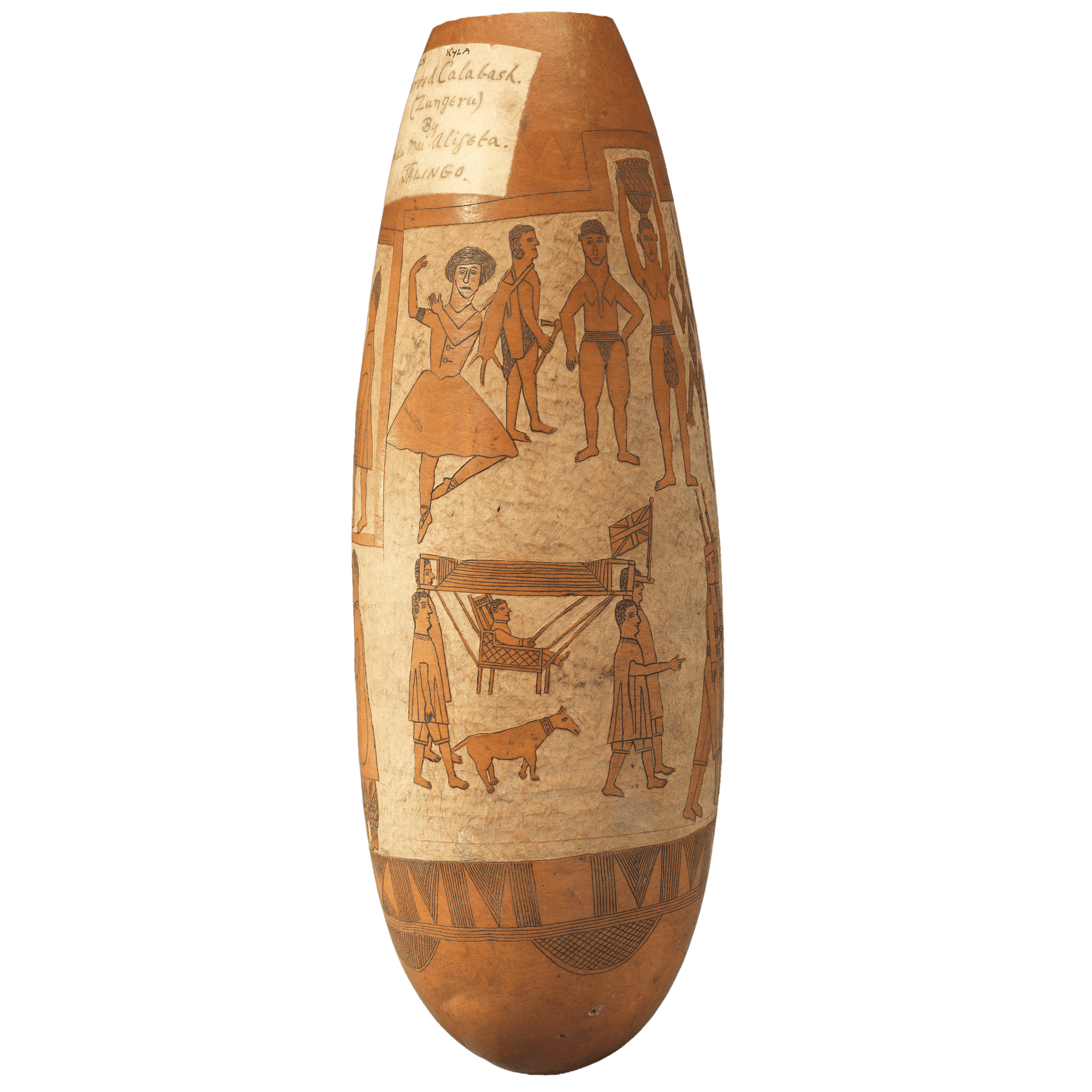
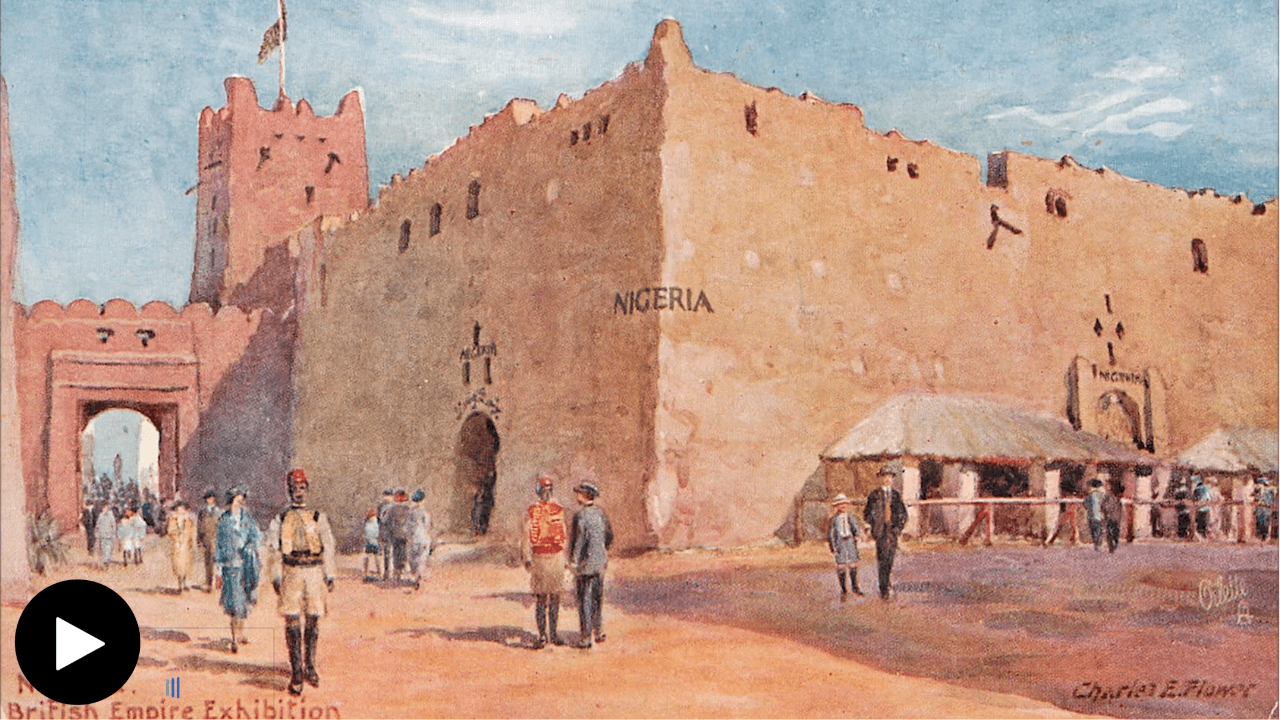
MADE FOR FOREIGN AUDIENCES: In 1924, more than 20 men, women, and children—artists and their families—traveled from Nigeria to London to carve, weave, and sculpt as part of a live display at the British Empire Exhibition. This world’s fair brought people, goods, and information about the British colonial world to London in an effort to promote inter-empire trade. This gourd was produced by Audu Mai Alijeta, a northern Nigerian carver who worked in the Exhibition’s Nigerian pavilion. The vignettes embellishing the gourd were likely tailored to its English viewers; they stand in stark contrast to the geometric style of decoration typical of northern Nigerian gourds. The scenes depict characters the artist may have encountered in colonial Nigeria and in London. While Audu Mai Alijeta was paid to live and work at the Exhibition, he can be seen as the maker, owner, and seller of this object, as all the artists were paid little by the organizers and expected to make the most of their compensation through the sale of their work. The recognizably British figures populating the gourd could indicate the artist’s understanding of his audience: the world’s fair attendees and predominantly British customers.


24
VIDEOS






4
PEOPLE

Erica
Jones
Senior Curator of African Arts and Manager of Curatorial Affairs at the Fowler Museum at UCLA


THEMES
ADDITIONAL RESOURCES
On Display in the Walled City: Nigeria at the British Empire Exhibition, 1924–1925
On Display in the Walled City: Nigeria at the British Empire Exhibition, 1924–1925. Press Release
UCLA/Getty Distinguished Speaker Series: Carlee S. Forbes and Erica P. Jones
Culture Fix: Andrew Apter on On Display in the Walled City
Fowler Families: Picture This! Create Your Own Postcard
Curator’s Choice: Provenance Research and Repatriation to African Communities